|
||||||||||
| Fire Station Headquarters | ||||||||||
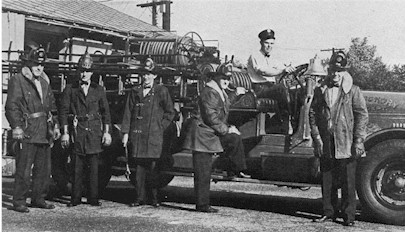
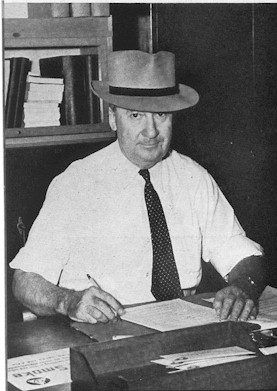
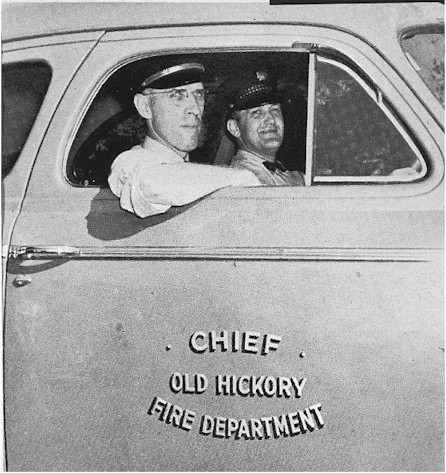
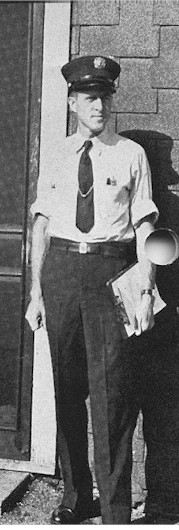
Rayon Yarns - September - October - 1942 Our plant and village are adequately protected from fire by a modern fire department of 17 men, including one fire chief, one captain, one lieutenant and one inspector. Six men are on duty day and night at the engine house. The men are constantly on call during the day to inspect operations at the plant which might involve fire hazards. Each night two men go through the plant inspecting sprinkler systems and fire extinguishers. Periodic searches are made in restricted plant areas for matches. In the Village the fire inspector investigates each place of business several times a year and each residence at least twice a year to avoid accumulation of inflammables and to give instructions and make recommendations on fire prevention. Lets all do our part the whole year round. Fire Fighters like these are constantly on the go to see that no fire starts. IN 1941 the plant's fire loss amounted to $557.10, Village $35.26.
|
||||||||||
| An
Early Glimpse of Old Hickory's ERT (Emergency Reponse
Team)
Rayon Yarns - September - 1944 |
||||||||||
|
|
||||||||||
| Did you ever hear of the Volunteer
Firemen? Don't feel badly if you haven't because you are not in a
class by yourself. In fact, that's the reason this article is
being written - we found that very few people had ever heard of
this worthy organization and knew next to nothing of its
activities. Being firm believers in giving
credit where credit is due we promptly set about "getting the
dope" on the Volunteer Firemen. In so doing, we uncovered
some facts that we believed will be of real interest to everyone.
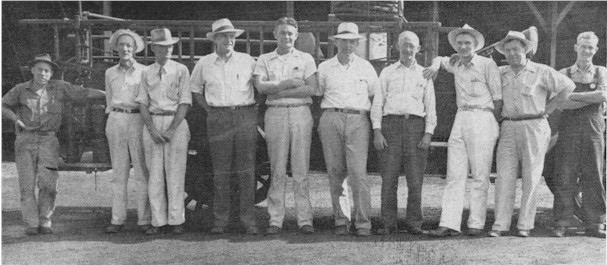
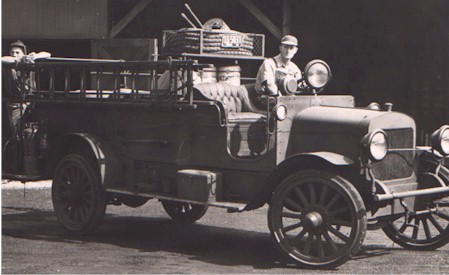
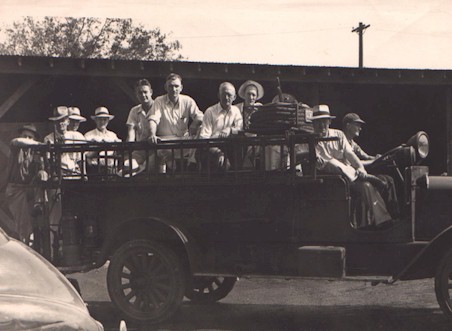
First of all this organization has been active since World War I and is made up wholly of volunteers, the one requisite being that the men be thoroughly familiar with the plant and its maze of water and power lines. For this reason we find that most of its members are from such departments as Air Conditioning, Spinning Maintenance, Electricians and Plant Service. Today there are 36 members, but due to shift work it was impossible to get the entire group together for a picture. The Volunteer Firemen not pictured are: William T. Davis, Hoffman Hornal, Spencer Bass, William M. Beakley, Jack Black, J.C. Jones, Roger Osborne, Alex Butterbaugh, Ottis Hire, Arthur Williams, Joseph Bowers, Malcolm Osborne, William Scott, Robert Hudson, James Curtis, John R. Boone, Edgar Hunter, W.V. Jennings, Hollis Lannom, Paul Koonce, Golden Thompson, J.W. Cook, Raymond Turner, Clyde Sellers, Robert Allen and Dennis Ryland. The Volunteers have all been thoroughly trained in the use of various types of fire extinguishers and with their knowledge of the plant they make excellent fire fighters. According to Chief Kelly, about 90 percent of the fires on the plant are put out entirely or brought under control by the Volunteers before the firemen from Headquarters arrive. This testifies to the ability and calm, sure speed that comes from knowing how to do a job well. The Volunteers help out in the Village only when the fire is of such nature that the Headquarters Company needs additional help. For several years past their calls to the Village have been few, but nevertheless they stand in readiness to go whenever necessary. The Volunteers have a fire truck that is used exclusively by them and is kept at the garage here on the plant. At the sound of the fire alarm from Village zones, the auto-call summons all Volunteer members to their truck station, where they man their truck and stand by for further orders. A second alarm from the Village before the first one has been tapped out will summon the Volunteers to the fire. In case of a fire on the plant they proceed at once to the scene of the fire. The fire truck that the Volunteers use is a rather ancient vintage, having been in use here during World War I. It still gives good service, but according to the records it is 26 years old. It is the same truck which was used by the Village until 1928 and still continues to render faithful service here on the plant, dashing to blazes on its solid rubber tires. There are many yarns spun around this old veteran. She has been summoned to put out the moon, has answered a call when a doctor was wanted instead, and has made many other runs of equal folly.
One of the Volunteers recalls this little incident. Back in the old days the fire chief was a man named Rogers and one night as Mr. Rogers stood in the fire hall door looking toward Riverside Drive a full moon suddenly appeared just over the tree tops which line the river bank at that point. Chief Rogers took one look and yelled out to his men, "Let's get going, men, all of Riverside is burning up." The old fire truck skidded to a sudden stop just in front of the chief's car, and much to his embarrassment one of the boys yelled out, "Chief, we ain't got enough hose to reach that fire." There was another story told about how the truck was called when actually a doctor was wanted. The man related the story like this: "One night the men of the Fire Department were sitting around the hall when the telephone rang. A male voice yelled into the phone to come to an address on Lawrence Street. Without a moment's hesitation the boys cranked up and went racing to their neighbor in distress. Just as the men were about to carry their hose through the front door, the excited man informed them that he didn't want the Fire Department, he wanted a doctor. The stork was hovering over his house and in his excitement he had phoned the Fire Department instead of the doctor." Another story told about the old truck is of more recent times. On one of the few trips that the old veteran has made back to the Village since her retirement from the regular Fire Department, she was traveling at her usual slow pace when someone on the back yelled to the driver to ask if he couldn't go a little faster, to which he replied, "Yes, but I think Chief Kelley wants us to bring the truck with us." The above incidents and many others were related by members of the Volunteers and while the fire fighters reminisced the thought suddenly occurred to us that they had spent many years as a part of this organization. When asked about the length of service they explained that the service was entered into voluntarily and only death or a transfer away from the plant ever caused them to quit their job. Their only compensation for this extra service is an annual pass to the theater. That, in military terms, would be expressed as "service beyond the call of duty" and we should be proud that we have at the plant such an organization as the Volunteer Firemen.
|
||||||||||
| Modern Day Volunteer Hero | ||||||||||
| by: Kris Brummett | ||||||||||
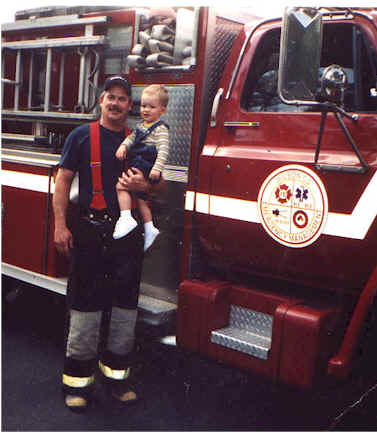 At DMT, Jamie Luffman
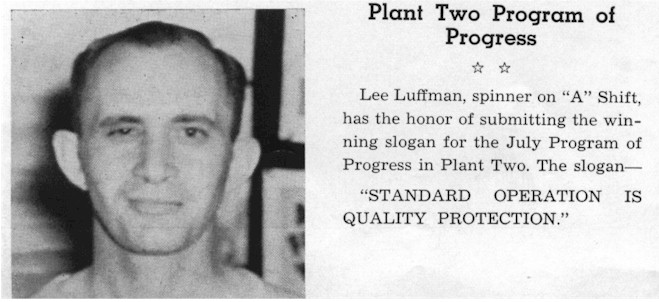
(pictured to the left with son, Josh) is affectionately referred to as "Captain Fireman" ..... due to his readiness and eagerness to always help in a crisis. When Colonel Jerry McFarland, Chief of the Wilson County Emergency Management Agency (WEMA), got wind that there was a "local" named Jamie Luffman who had a wealth of knowledge about handling hazardous materials, he wasted no time in recruiting him. At DMT, Jamie Luffman
(pictured to the left with son, Josh) is affectionately referred to as "Captain Fireman" ..... due to his readiness and eagerness to always help in a crisis. When Colonel Jerry McFarland, Chief of the Wilson County Emergency Management Agency (WEMA), got wind that there was a "local" named Jamie Luffman who had a wealth of knowledge about handling hazardous materials, he wasted no time in recruiting him. Jamie has spent much of his recent time helping to organize a group of 50+ businesses in the Wilson County area to ensure they are trained on all aspects of hazardous materials handling. Jamie also responds anytime WEMA is contacted concerning an incident involving a hazardous material. Immediately following 9/11, WEMA received approximately 30 calls. "Policies have changed alot since then," said Jamie. According to Jamie, the training he and others receive at DuPont is thorough enough that "alarms" are infrequently pulled. However, in rural Wilson County, businesses have not benefitted from the same preparedness that DuPont has............ until now. It should also be noted that Jamie also worked with site management to have the old VHF radios donated to the WEMA. Jamie's grandfather, who also worked for DuPont, is pictured here as a safety slogan winner.
|
||||||||||
| Famous Fires | ||||||||||
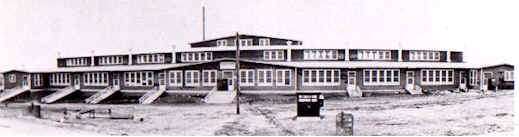
(1918) DuPont officials, rather than the city or county governments, assumed the responsibility for establishing a school system. They began construction of two twenty-four room grammar schools and one twelve-room high school in late August. They sought the aid of Nashville and Davidson County school teachers, and anticipated beginning the fall session on October 1. The opening of school was delayed by the flue epidemic and a fire which burned on of the twenty-four room buildings to the ground on October 27. It was the first fire of consequence at Old HIckory, and DuPont officials in Wilmington approved a request to place top priority on replacing the $75,000 structure.* * Du Pont Engineering Company Request to E.I. du Pont de Nemours & Company, October 30, 19918, Du Pont Engineering Company files, Du Pont Hall of Records, Wilmington, Delaware.
DuPont Elementary - 1918
|
||||||||||
| 40
Million Pounds of Powder Once Blew Up Here - Problem of Storage After War Troubled Some; No Powder Here Now Old Hickory News - 15th Anniversary Souvenir |
||||||||||
| What to do with the
finished powder left here after the Armistice was a source of great
concern to those persons in charge of closing operations. Much of
it was shipped away but there was still enough in Old Hickory to blow
lots of people to kingdom come. Various methods of storing the
powder were utilized, with an eye to preservation and
safety.
One particular building was taken over, far down behind the present plants, close to the river, and forty million pounds put there. This entire amount went up in smoke with a complete loss, but there was no damage or jar as might be expected for such an occurrence. An N.I.C. official describes it as simply a big, sudden "whoof" of smoke with no real explosion. He says that the manner in which the powder was stored prevented any serious blast. Another forty million pounds which had first been placed in a building in similar manner was moved at the Government's request when age began to have its effect. This quantity was transferred to the raw water basins of the filter plant and sunk beneath the water where it could be better preserved. Today there is no powder in Old Hickory. The last amount was removed from the basins several years ago and there are no longer any fears that the village will be rocked by a tremendous explosion such as some people expected in the past. |
||||||||||
|
|
||||||||||
| The Day
the Gym Burned Rayon Yarns - December 1942
|
||||||||||
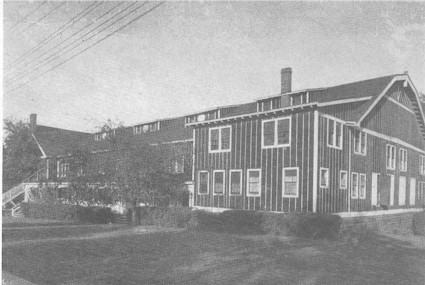
| On Friday morning, November 26, at
2:00 a.m., Old Hickory suffered a great loss. The Jones Street
Gymnasium, which housed the Soldiers' Lounge, Boys' Work rooms, Red
Cross sewing rooms, Girls' Club, basketball court, the home of Mr. and
Mrs. E..M. Glover, and several other activities, was completely
destroyed by man's worst enemy, FIRE.
We had never realized till now how much the "Big Gym" was a part of our community life. It was used for every occasion that called for a large gathering, and has echoed numberless times to the strains of dance music and the happy beat of dancing feet. The queer feeling of loss, almost a lump in our throats, is not merely regret at the loss of valuable equipment. An atmosphere of good-fellowship, something that was part of our lives, went up in flames on Thanksgiving night. |
|
|||||||||
|
|
||||||||||
| The High School Fire | ||||||||||
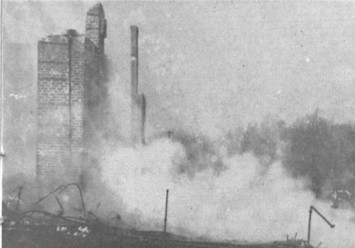
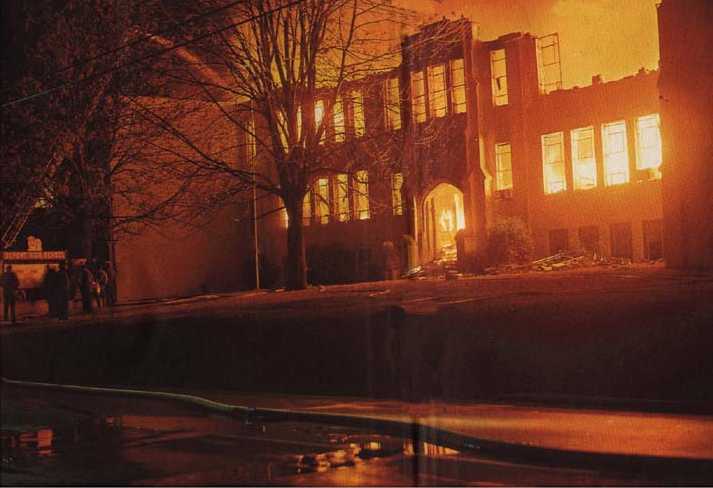
| DuPont High
School burned down in 1967. The cause was arson.
Unfortunately, the same individual who set the high school on fire also
set the elementary school on fire. The elementary school was
located next to the present-day Church of Christ on Hadley. The
gym (now DuPont-Hadley Middle School) and the football field are
the only indications that a high school once stood on the land on Old Hickory Blvd. |
||||||||||
|
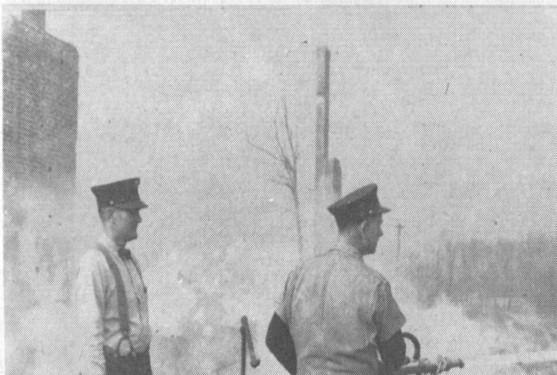
This photo is courtesy of John
Zentz and appears along with other photos of this fire on the web
site managed by Wilson Stewart.
|
||||||||||